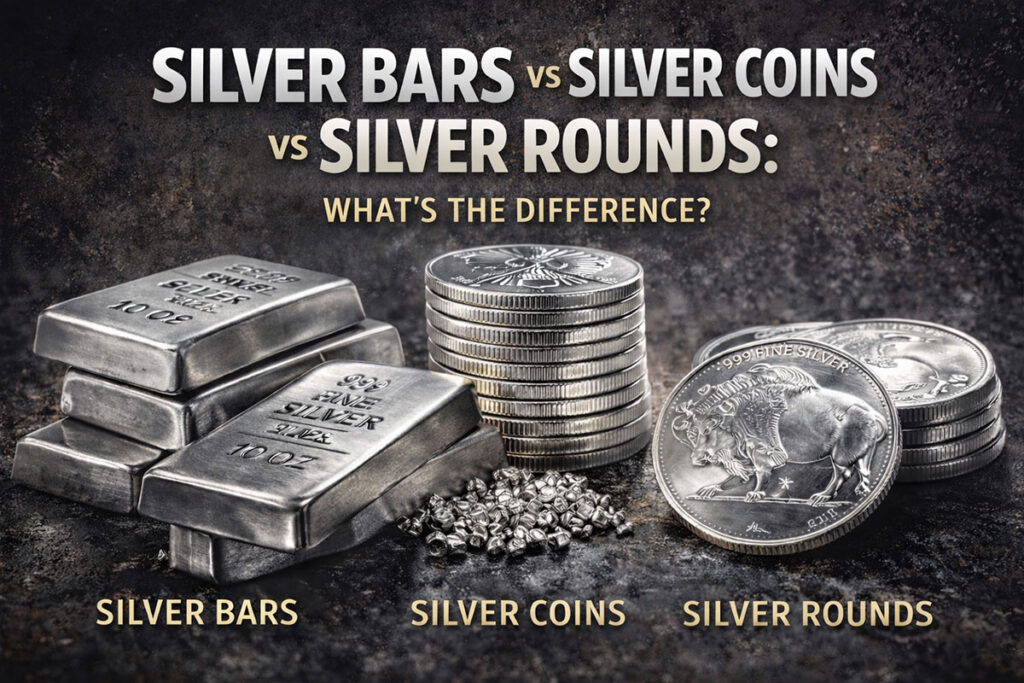
What is the difference between silver bars, silver coins, and silver rounds?
There are many different types of silver which investors and collectors like to acquire/buy. Silver bars are rectangular bullion products focused on weight and low premiums, silver coins are government-issued legal tender with higher recognizability, and silver rounds are privately minted, coin-shaped silver pieces that balance affordability and liquidity.
Why understanding silver types matters before you buy
One of the most common mistakes new buyers make is purchasing silver without understanding what type of silver they are buying. While all physical silver contains intrinsic value, premiums, liquidity, and use cases vary significantly between bars, coins, and rounds.
Choosing the right format can help you:
- Avoid overpaying
- Improve resale flexibility
- Align silver purchases with your long-term goals
What are silver bars?
Silver bars are bullion products primarily valued for their silver content and weight.
Key characteristics of silver bars:
- Typically .999 fine silver
- Available in sizes from 1 oz to 100 oz or more
- Lower premiums over spot price
- Ideal for long-term stacking
Silver bars are popular among buyers who prioritize maximum silver for their money and are less concerned with collectibility.
What are silver rounds?
Silver rounds are privately minted, coin-shaped silver pieces that are not legal tender.
Key characteristics of silver rounds:
- Usually 1 troy ounce of .999 fine silver
- Lower premiums than government coins
- Easy to store and trade
- Widely accepted by dealers
Rounds are often considered the best balance between affordability and flexibility, making them a common choice for consistent accumulation.
What are silver bullion coins?
Silver bullion coins are produced by government mints and recognized as legal tender.
Key characteristics of silver bullion coins:
- Issued by national mints
- Typically 1 oz of .999 or higher purity
- Higher premiums due to minting and recognition
- Strong global liquidity
Bullion coins are often preferred by buyers who value recognition, trust, and ease of resale, even at a higher upfront cost.
Which type of silver is best to buy in 2026?
There is no single “best” type of silver for everyone. The right choice depends on your objectives.
Silver bars are best if you:
- Want the lowest premiums
- Are focused on long-term holding
- Plan to accumulate larger quantities
Silver rounds are best if you:
- Want cost efficiency with flexibility
- Prefer uniform 1 oz pieces
- Plan to buy consistently over time
Silver coins are best if you:
- Value recognizability and liquidity
- Prefer government-issued products
- Are willing to pay higher premiums
Many experienced buyers use a combination of all three to balance cost, liquidity, and recognition.
Does silver type affect storage?
Yes. Storage considerations vary depending on form and quantity.
- Bars take up less space per ounce but can be heavier
- Coins and rounds are easier to divide and trade
- Larger holdings often benefit from professional vaulting
TheSilverBroker helps clients safely acquire verified and tested silver in all major formats and offers secure storage solutions for clients who prefer professional vaulting over home storage.
Common mistakes when choosing silver types
Buyers often make these errors:
- Assuming higher premiums mean better value
- Ignoring resale flexibility
- Buying novelty or collectible silver unintentionally
- Mixing investment silver with numismatic purchases
Understanding the differences helps keep silver ownership simple and purposeful.
Why silver format matters more in 2026
As silver demand increases due to medical equipment, renewable energy, AI infrastructure, and global data centers, premiums and availability fluctuate more frequently.
Owning recognizable, verifiable physical silver in practical formats improves liquidity and reduces risk in a tightening market.
Quick Summary: Silver Bars vs Coins vs Rounds
- Silver bars offer the lowest premiums
- Silver rounds balance cost and flexibility
- Silver coins provide recognition and liquidity
- A diversified approach often works best
- Verified authenticity is essential
Disclaimer
This content is provided for informational purposes only and does not constitute financial or investment advice. TheSilverBroker.com is not a financial advisory service, and nothing on this website should be interpreted as a recommendation to buy or sell any asset. Always consult with a qualified financial professional before making investment decisions.