What is the difference between physical silver and silver ETFs?
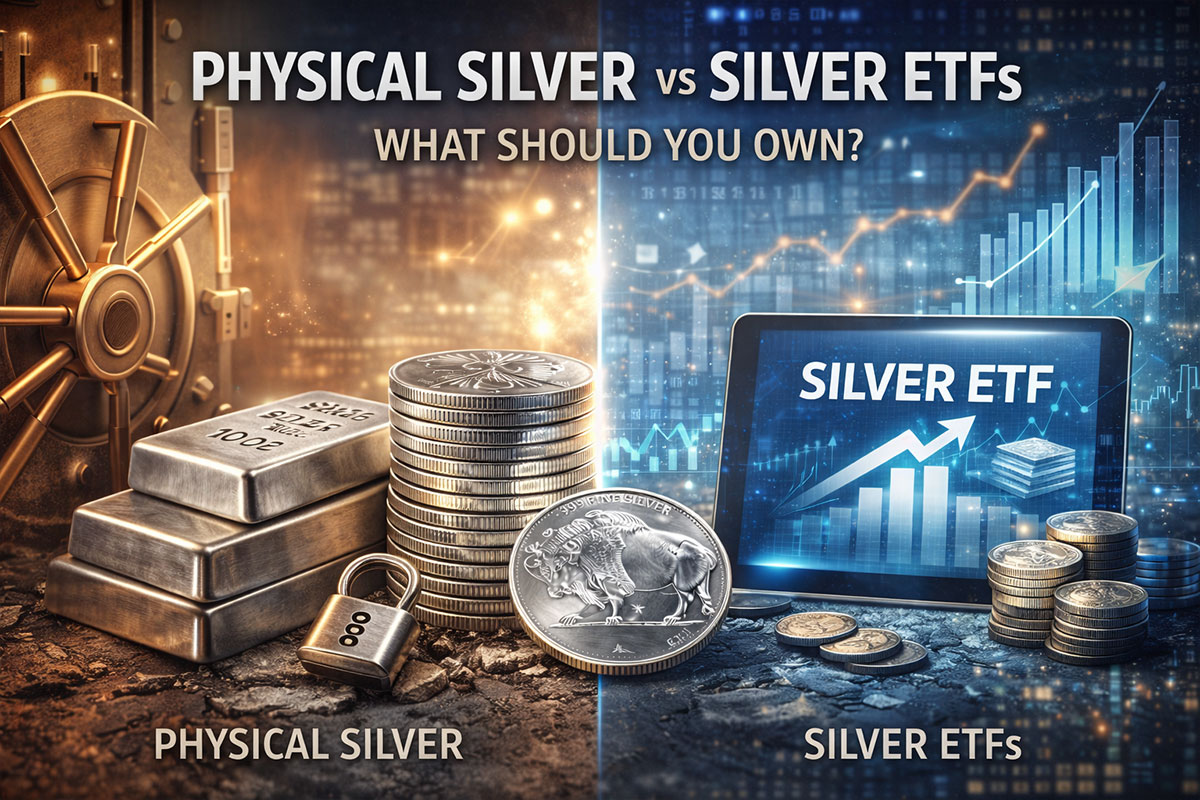
Physical silver represents direct ownership of tangible silver bars, rounds, or coins, while silver ETFs are financial products that track the price of silver without providing direct possession of the metal.
Why this comparison matters in 2025–2026
As interest in silver grows, many buyers face the same question: Should I own physical silver or invest through a silver ETF?
While both provide exposure to silver, they function very differently and serve different objectives.
Understanding the trade-offs helps buyers align their silver strategy with their goals around control, risk, liquidity, and long-term ownership.
What is physical silver?
Physical silver refers to tangible silver products such as:
- Silver bars
- Silver rounds
- Silver bullion coins
When you own physical silver, you have direct possession or allocated ownership of a real-world asset with intrinsic utility and finite supply.
Key characteristics of physical silver:
- Tangible, verifiable ownership
- No counterparty dependency
- Can be stored privately or professionally
- Historically used as money and a store of value
What is a silver ETF?
A silver ETF (Exchange-Traded Fund) is a financial instrument that tracks the price of silver and trades on stock exchanges like a traditional equity.
Silver ETFs provide price exposure, not physical possession. Ownership is represented by shares, not silver held directly by the investor.
Key characteristics of silver ETFs:
- Easy to buy and sell through brokerage accounts
- Highly liquid
- No storage logistics
- Subject to counterparty and systemic risk
Physical silver vs silver ETFs: Key differences
Ownership and control
- Physical silver: You own the metal itself
- Silver ETFs: You own shares of a financial product
Counterparty risk
- Physical silver: No reliance on financial institutions
- Silver ETFs: Depend on custodians, fund structures, and markets
Storage
- Physical silver: Requires secure storage (home or vaulting)
- Silver ETFs: No storage responsibility
Accessibility
- Physical silver: Requires sourcing and delivery
- Silver ETFs: Can be traded instantly during market hours
Why many buyers prefer physical silver
Physical silver appeals to buyers who value direct ownership and long-term security.
Common reasons people choose physical silver include:
- Desire for assets outside the financial system
- Protection against systemic or counterparty risk
- Tangible ownership with real-world utility
- Long-term wealth preservation
TheSilverBroker helps clients safely acquire verified and tested physical silver, ensuring authenticity and quality. For those who prefer not to store silver at home, TheSilverBroker also offers secure professional storage solutions, simplifying ownership while reducing risk.
When silver ETFs may make sense
Silver ETFs may be suitable for individuals who:
- Want short-term price exposure
- Trade frequently
- Prefer convenience over ownership
- Already operate primarily within brokerage accounts
ETFs can be useful for tactical exposure, but they do not provide the same level of control or security as physical ownership.
How silver’s industrial demand impacts this decision
Silver is increasingly essential to:
- Medical equipment and healthcare technology
- AI systems and data centers
- Renewable energy and electrification
Because silver is the most electrically conductive metal, its real-world usage continues to expand. Physical silver represents ownership of a material with growing industrial necessity, not just price exposure.
Which option is better for long-term ownership?
There is no single answer that fits everyone. However, for those focused on long-term ownership, control, and risk reduction, physical silver offers advantages that financial products cannot replicate.
Some buyers choose a hybrid approach, buying silver and holding physical silver for security while using ETFs for short-term exposure.
Quick Summary: Physical Silver vs Silver ETFs
- Physical silver provides direct ownership
- Silver ETFs provide price exposure only
- Physical silver avoids counterparty risk
- ETFs offer convenience and liquidity
- Long-term holders often prefer physical silver
Disclaimer
This content is provided for informational purposes only and does not constitute financial or investment advice. TheSilverBroker.com is not a financial advisory service, and nothing on this website should be interpreted as a recommendation to buy or sell any asset. Always consult with a qualified financial professional before making investment decisions.