How should silver be stored safely?
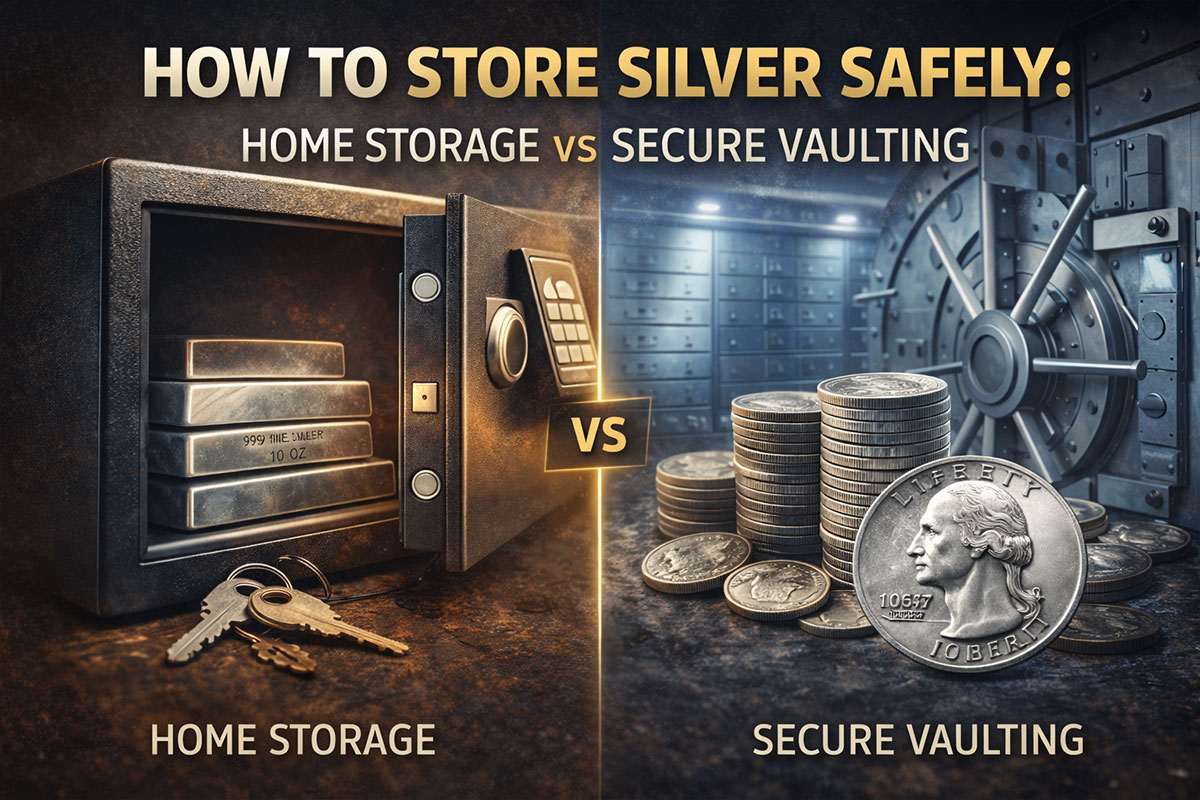
Silver should be stored in a secure environment that protects it from theft, damage, and loss. The two primary options are home storage and professional secure vaulting, each with different advantages depending on the amount of silver owned and personal risk tolerance.
Why silver storage matters
Buying physical silver is only half of the ownership equation. How silver is stored directly affects its security, longevity, and accessibility.
Poor storage decisions can expose silver owners to:
- Theft or loss
- Damage or tarnishing
- Insurance complications
- Unnecessary personal risk
Planning storage in advance is an essential part of responsible silver ownership.
Home storage: Pros and considerations
Home storage means keeping physical silver in your personal possession, typically in a safe or concealed location.
Advantages of home storage
- Immediate access to your silver
- Full personal control
- No third-party reliance
Considerations with home storage
- Requires a quality safe and secure location
- May increase personal security risk
- Insurance coverage may be limited or costly
- Larger quantities become harder to protect
Home storage is often best suited for smaller holdings or silver intended for quick access.
Secure vaulting: Pros and considerations
Secure vaulting involves storing silver in a professional, insured facility designed specifically for precious metals.
Advantages of secure vaulting
- High-level physical security
- Reduced theft and loss risk
- Professional handling and inventory tracking
- Suitable for larger silver holdings
Considerations with secure vaulting
- No immediate physical access
- Storage fees may apply
- Requires trust in the storage provider
Vaulting is commonly used by buyers holding significant quantities of silver or those prioritizing long-term security.
How much silver should influence storage choice?
Storage decisions often change as silver holdings grow.
- Small amounts: home storage may be practical
- Medium amounts: a combination of home and vaulting
- Larger amounts: professional vaulting is often preferred
Many experienced buyers use a hybrid approach, keeping some silver accessible while storing the majority securely.
Does silver need special care?
Silver is durable but can tarnish over time if exposed to moisture or contaminants.
Proper storage includes:
- Dry, climate-controlled environments
- Protective containers or sleeves
- Minimal handling
Professional vaults are designed to maintain optimal conditions for long-term silver storage.
Common silver storage mistakes to avoid
Silver owners often make these mistakes:
- Storing silver in unsecured or obvious locations
- Failing to insure valuable holdings
- Keeping all silver in one place
- Not planning storage before purchasing
Avoiding these errors significantly improves peace of mind and security.
How TheSilverBroker supports secure silver ownership
TheSilverBroker helps clients safely acquire verified and tested physical silver and offers secure storage solutions for those who prefer professional vaulting rather than home storage.
This approach allows clients to focus on ownership without the complexity of managing security logistics themselves.
Why storage is part of long-term silver ownership
Silver is often held as a long-term store of value, not a short-term trade. Secure storage ensures that physical silver remains protected and accessible when needed, regardless of market conditions or economic changes.
Quick Summary: Storing Silver Safely
- Silver must be protected from theft and damage
- Home storage offers access but requires strong security
- Secure vaulting reduces risk for larger holdings
- Many buyers use a hybrid storage approach
- Planning storage is essential before purchasing silver
Disclaimer
This content is provided for informational purposes only and does not constitute financial or investment advice. TheSilverBroker.com is not a financial advisory service, and nothing on this website should be interpreted as a recommendation to buy or sell any asset. Always consult with a qualified financial professional before making investment decisions.